
by Thomas Coles
One from the Archives: This blog was taken from an exchange in 2017
My background:
My exchange was the last semester of my BMS degree. I had taken some French classes at university which served me well in Marseille but I still took all my classes in English. I had done three years in Bryant Hall, two as an RA, so I was keen to do an exchange to enjoy some freedom.
Having now completed my exchange, as cliché as it sounds, it was the experience of a life-time and is something that I can’t recommend highly enough while you’re at Waikato.
This review will be in two main parts: firstly I’ll explain my experience in Marseille, the south of France and travelling around Europe and then I’ll give some general advice relevant for anyone considering an exchange anywhere in the world. I’ll then finish with a little bit for people studying French and considering Marseille for an exchange.
Marseille: Photo: Marseille at Sunset Marseille is the second biggest city in France, after Paris, with just under 900,000 people and has over 300 days of sunshine a year. In the three and a half months I could count the times it drizzled there on one hand. It’s a very old city built, much older than Paris, which shows in its’ stunning Greek/Roman architecture.
Marseille was a great city for many reasons. Firstly there was a lot to see, in the city there are beautiful churches and monuments to see and the night life was good fun too. From a nature perspective there is the Calanques National Park, which I found myself visiting weekly, as it had lovely walking tracks and beautiful calanques (lagoons) to swim in. Marseille also provides a great culture experience, with a diverse culture and plenty of opportunity to speak French.
Marseille does have a dangerous reputation for two main reasons. Firstly because it is the gateway for drugs into Europe, so the northern part of Marseille is a no go zone, even for the Police but there’s nothing exciting there anyway. Secondly it has a lot of immigrants from French speaking African countries such as Morocco, Algeria, Tunisia etc. that people outside Marseille say makes it dangerous but it really isn’t. I did hear a few unfortunate stories but nothing I wouldn’t hear of in Hamilton so don’t let this put you off but stay close with your friends on nights out.
Top Five things to do in Marseille:
1) Go to the Calanques National Park – easy walk to the beach with longer walks too. Pictured here.

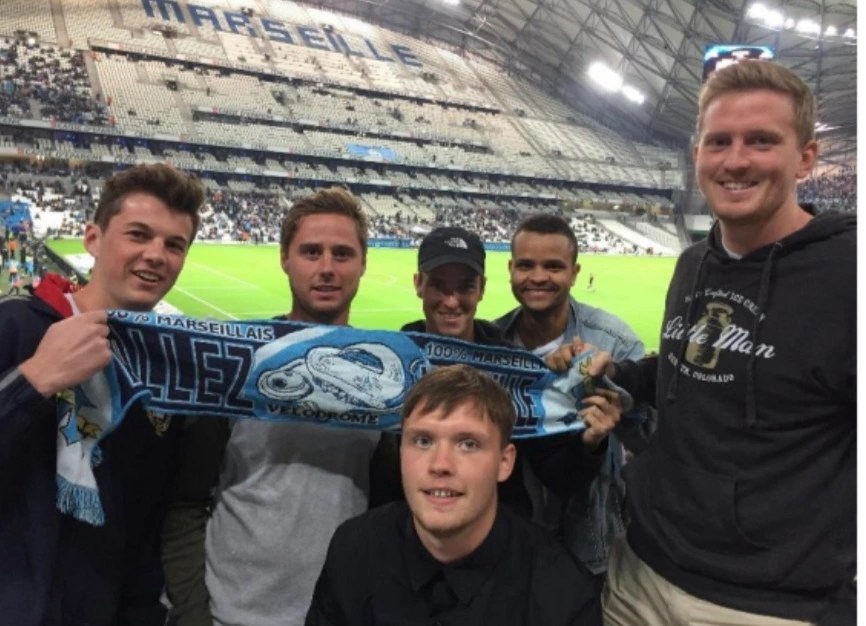
2) Watch a Marseille Football game – the fans are some of the best around the world.
3) Go to Notre Dame de la Garde for sunset – best view of the city from a stunning cathedral.
4) Have a night at Rooftop Night Club – best club in Marseille, outdoors with lovely views.
5) Go to the markets – visit daily markets in and around the centre of the city especially at Christmas time.
South of France:
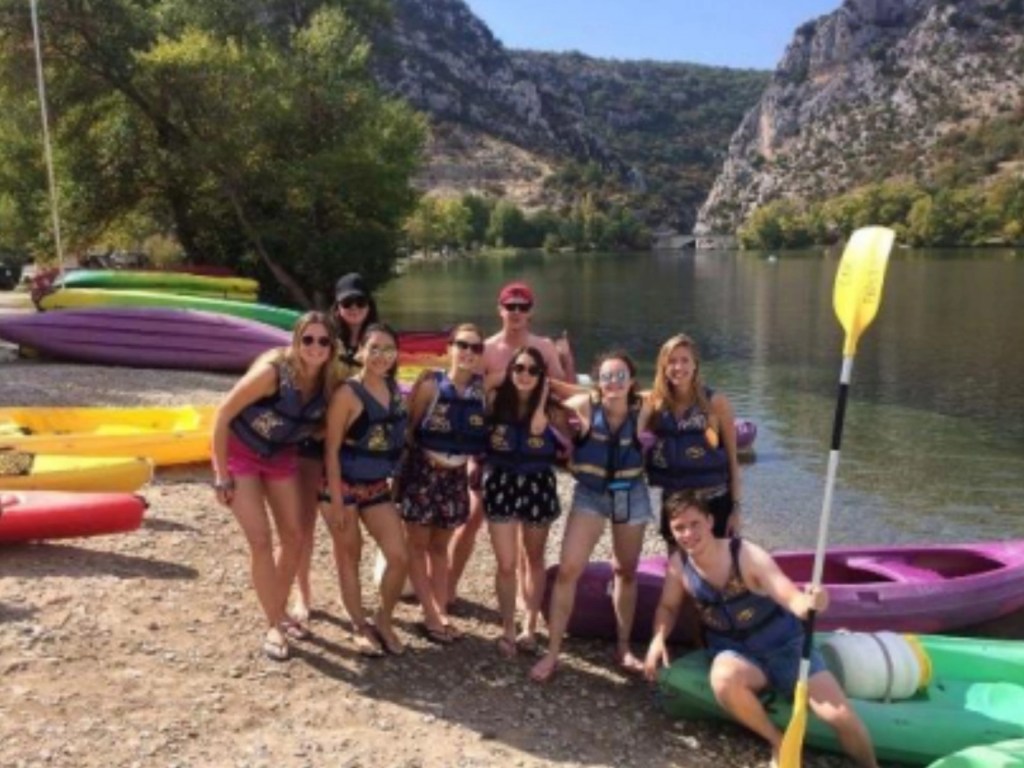
Marseille is at the heart of the south of France which offers you many amazing cities and scenic trips reachable by train or bus, which is great if you are doing an exchange on a budget. While in Marseille I went to Nice and Cannes which are two beautiful cities only two hours from Marseille yet completely different. I also went to Lake Geneva, which was stunning to drive around, Les Gorges du Verdon to kayak, another highlight of the exchange and since Marseille I went to French alps to do both winter and summer seasons.
In winter it’s a great place to ski and in the summer people come from all over the world for hiking and mountain biking.
If you do come to Marseille be sure to visit Europe but be sure to explore the region because it’s famous around the world and it’ll make your budget go a lot further plus you’ll see how diverse the French culture is in different places.
Top Five things to do in the South of France:
1) Kayak Les Gorges du Verdon – breathtaking views, easy for unexperienced kayakers. Pictured here:
2) Visit the French (Rhone Alps) – amazing skiing and hiking with views you’ll never forget.
3) Go to Nice – beautiful city with lots of colour, on the beach and day trip to Monaco.
4) Visit a little town – there are so many hidden gems you never would have heard of well worth visiting.
5) Go to Corsica – never went but I’m excited to go one day to this stunning island.
Europe:
If you go on an exchange in Europe you are going to want to explore other countries. One of the best things about Europe compared to other continents is that it is so diverse in such a small space, meaning that you can explore plenty of countries and cultures while studying abroad.
Top Five Tips for Travelling in Europe:
- Don’t f*** around. Before you know it your exchange will be over so don’t waste time once you get there. Find some friends pick a place to go and you’ll have a blast. If you leave it until too late your exams will get in the way.
- Minimise using public transport. When you get to a city many people go around seeing the sites but miss so much because they are sitting on a train or bus between sites. Walking is a great way to get to know the city better and it’ll save you money. When travelling I often walked 15 to 20k a day.
- Research before you get there. Read reviews to find good hostels and read trip advisor to get tips on how to have a great time and save money. This will help you budget for trips too.
- Don’t be rookie tourist. Part of travelling is trying to immerse yourself into the culture so try and stay away from touristy restaurants, ones with English signs, and get out of the city centre and meet some locals to get a better feel for the place.
- Travel in small groups. Personally large groups annoyed me because everyone wants to do different things and this means you end up seeing less so travelling in small groups helps you see more than what you would have otherwise.
Best Five Places to go in Europe:

1) Eastern Europe: Prague (pictured above), Budapest, Sofia, Krakow, Berlin and
Warsaw may be places that you haven’t heard of but are some of the most beautiful
cities in the world, with stunning architecture, amazing food, historical sites and
incredible night-life. It’s also very cheap which is great for when you are on exchange.
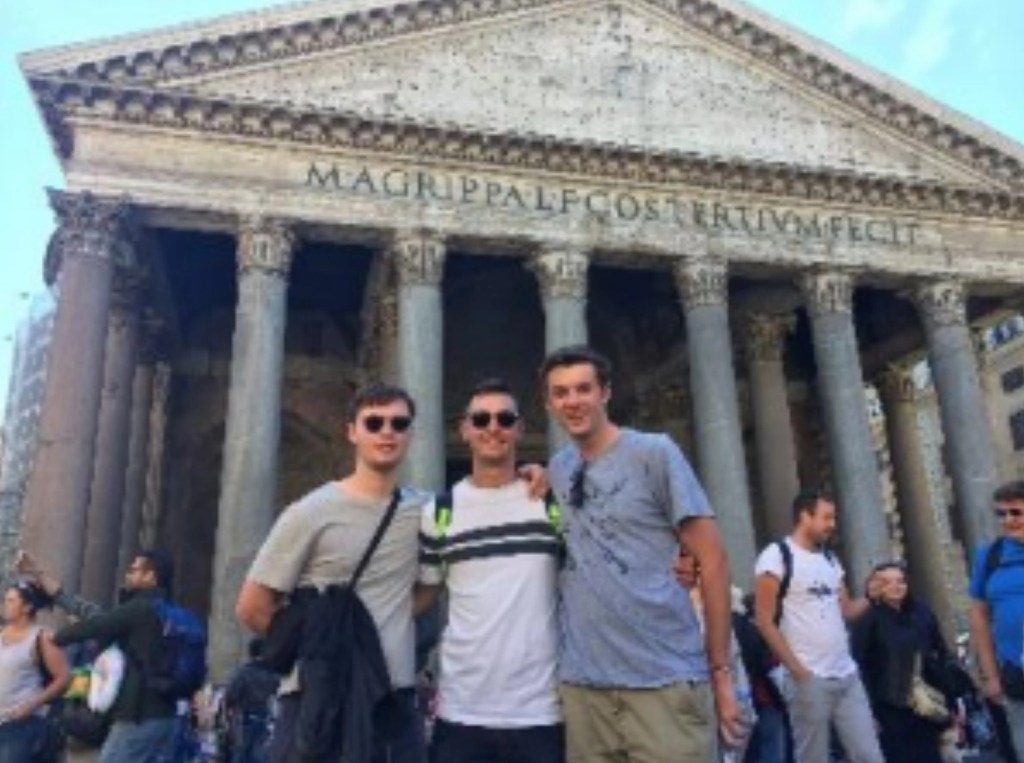
2) Italy: probably my favourite country in Europe with my favourite city Rome. Like France it has a large variety of landscape and architecture plus as I’m sure you know,
it’s a fantastic place to eat. Pictured here:
3) Greece, Croatia and Montenegro: these countries have some of the most beautiful beach towns in the world and are all very affordable. Greece and Croatia are
more popular but Montenegro is just as beautiful but less touristy and therefore
cheaper. Sail Croatia is a great experience if you are there over the summer time too.
4) Spain and Portugal: these two stunning countries have a great mix of stunning cities,
such as Madrid, Barcalona, Valencia, Lisbon and Porto, in the north while in the
south you’ll find some beautiful beach towns, like Farro, Lagos and Sevilla. These two
countries are by far the cheapest in Western Europe.
5) Northern Europe/Scandinavia: this is by far the most expensive part of Europe but it
does have some of Europe’s most popular cities like London, Paris and Amsterdam
but due to how pricy they are I have put them below the other places on my list
considering you’ll be on a tight budget.
Kedge Business School – Marseille Campus:
Kedge has multiple campuses you can pick from including Bordeaux and Paris. But I was in Marseille so I’ll be focusing on that. Despite Kedge outstanding rankings and endorsements I thought it was a very disappointing, especially on an organisational and challenge front. But it was rather easy which worked well for me. And the teachers on the whole spoke great English so again no need to worry if you don’t speak French.
Bachelor students at Kedge take five to seven courses a semester. Most of which have one three hour class a week, which is half a lecture and half a tutorial. If you focus well in these you’ll need to do very little study to pass comfortably. Each course is ten weeks long and there is a week break in the middle. I did five papers and it was very manageable timewise.
Masters students have it quite different at Kedge. As oppose to taking all your courses at
once over a semester at Kedge you’ll take one course at a time and they generally only take a week but have daily classes. This means you have more holiday time than bachelor
students which is good for travelling but more busy periods as well.
Annoyingly it takes them a while to confirm what papers they will offer and even longer for them to produce paper outlines which is frustrating for cross-crediting but I had no
problems in the end.
There are also French classes for people wanting to learn French from rookie to expert and they are actually very good classes.
Accommodation:
Just like Waikato you can either stay in the halls or in a flat. I elected the halls option and it didn’t disappoint. I was living with over 100 international students from all over the world and made some very good friends who I travelled and partied with throughout the semester, many of which I consider my closest friends. The self-catered accommodation
was even by Waikato standards, incredibly basic especially for the price but for the experiences I had it is what I would definitely recommend unless you want a quiet place to study hard. Most of the people I lived with spoke minimal French so don’t think you can’t come to France if you don’t speak French but it does help. People that
I met in Alotra, my halls of residence, also gave me great advice on where to travel and they even organised me to meet their friends in some cases which meant I learnt a lot more about the places I visited.

Marseille Study Abroad:
The equilvant of our Study Abroad Network (SAN) in Marseille were a highlight of the
school. They were a really passionate team, keen to deliver you with tonnes of great
experiences. These mainly included themed parties throughout the semester as well as day trips to go skiing, kayaking and to a water park for orientation. They can also connect with you other clubs and sports teams if you are interested too.
Visa:
I have a British Passport so I was fortunate enough not to need one. If you do have one
definitely call the French Embassy in New Zealand to see if this is still the case with Brexit.
From my understanding if you have a NZ passport you need to go to Wellington to get your visa. Be sure to get onto this ASAP because the French love to make these process
unnecessarily long!
How to pick where you want to go on exchange:
Here are some key questions you want to ask yourself when picking where you want to go on exchange. Some of you will value some questions more than others but this should be quite helpful.
Am I willing to go somewhere that doesn’t speak English? If no, then you have
probably cut your options in half.
How much are you willing to spend?
What do you want to see/experience? Nature, cities, college life, culture etc.
Do I want to go to a great school for my CV or am I happy just filling up my degree
planner?
Once you get a shortlist of choices talk to people who can give you more advice about these places to see if it’s the right school for you. Reach out to SAN and the OE office, they’ll be able to put you in touch with students who have been on exchange to these places and potentially students from these schools studying in Waikato.
Budgeting:
Be sure to try and get any grant you can to help aid your budget. The more money you have the better but don’t let budget planning scare you off. If you get a grant, work hard for a summer and use the student loan system it’s very do-able for anyone. Remember when you are at Waikato, you still pay for food, rent and fees so really you just need to add your travel expenses to your usual budget.
French Students:
If you are a French language student sadly you can’t come to Marseille as it’s a business
school but if you have a second degree or another major with business topics you can and I highly recommend to enjoy French culture and learn the language. I had done 232 at uni and then had a year off French before going but just from having a lesson a week, meeting locals, joining the rugby team and going to shops my French really improved. If you wanted to become fluent then I would recommend looking for a flat where you’ll be living with French people and/or taking your business classes in French.




 Waikato Global Experiences Blog