

From the Archives: Jacqueline Caisley – B Trimester, 2019
I went to the University of Alaska Southeast in Juneau Alaska for the Spring Semester in 2019. I did this through ISEP (International Student Exchange Program) which is quite different than doing a direct University of Waikato exchange. To do ISEP you have to be willing to pay extra admin fees and enrol in their own insurance for the duration of your exchange. The good things about ISEP is that you have more contacts throughout your exchange if you are unsure about something, they give you guidelines on entry into your host country including guidelines on getting your visa, host country information and a detailed pre departure briefing so I felt very prepared to go, doing ISEP meant I had more options for exchange destinations. The negative things are the extra costs, their insurance only covers health and not travel. I think you need both for an extended overseas trip, so I had to pay two lots of insurance rather than one. There is also extra paperwork to do for ISEP that can be boring. Overall ISEP was worth it for me since it gave me my favourite exchange destination, but it also meant more work and costs.
I decided to go on an exchange because I wanted to experience something different. This was especially true for my degree. I study animal behaviour and going to somewhere like Alaska gave me a whole new ecosystem to study and experience and because of the different location there were different papers that I never would have gotten in New Zealand. It gave me a completely new perspective on my field of study which was invaluable. Going to the University of Alaska was also a very relaxed university and so I could get out and do something almost every single weekend, there were only two weekends in the whole semester where I didn’t go do something big. So it was invaluable for me to get outside and do something rather than forcing myself to stay inside. I learnt I could do more than I ever thought!

For preparing to go on exchange, my biggest advice is to get started as early as possible, especially for getting a visa. I had to do a lot of shopping to get items I needed for living in Alaska and that took a long time to organise. Try to bring as minimal stuff as possible, I had one large suitcase and one backpack and I didn’t need anymore than that. I decided that if I wanted to pack something where I said ‘but what if I need this’ I didn’t take it, so if you want to pack something for just in case, don’t pack it as it takes up unnecessary space and weight. Also buy things in your host country so you don’t have to pack it like shampoo and soap. You will be surprised at how resourceful you can be if you need to be.
In terms of preparing for university and choosing courses, make sure you get papers approved as early as possible. This was possibly the most stressful part of the exchange because courses didn’t get released early enough for me and I had to change which courses I was taking. Find a good contact at Waikato to sign off papers for you so that you can get them signed off as early as possible. At Alaska there are so many different types of courses, I took an outdoor studies class (which is something that they specialise in) and a native art class. Doing an outdoor studies class is something very different and special as well as a lot of fun! I did Avalanche theory and evaluation and had a blast in that course! You do have to have a reasonable level of fitness to do these courses, I don’t consider myself a very fit person but I managed and I can’t recommend one of these courses enough since they put you out of your comfort zone and give you amazing memories. Not to mention they only last two-three weeks so once it is finished you lose a lot of hours in your timetable which reduces your workload and gives you more time to explore Juneau! Also doing a native class was amazing since it is unique and gives you an amazing look into the native culture which I didn’t really get outside of my class, it was also a lot of fun and never felt like work. So take advantage of the new and different courses available!
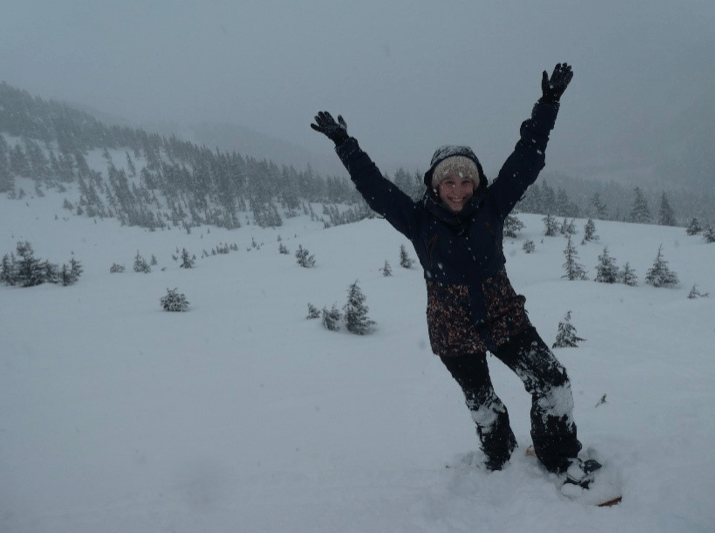
Since you are going to be living in snow at some point in your exchange here is a list of the gear I loved and thought were invaluable. A good pair of boots, I bought some expensive hiking boots and I wore then every single day, they were really warm and good to stop injuries if I slipped on ice. The only drawback was they weren’t good for walking on slippery surfaces so get a pair that has good traction – you can also buy ice grippers to go on your shoes if you have trouble with traction which is what I did. Wool socks, I had only wool and thermal socks and they worked great in the cold, for my days at the mountain I wore two layers and that worked well (when you shop for shoes take thick wool socks to try on with so you get the correct size). Thermal underlayers, I had some wool and thermal shirts and leggings to wear underneath jeans and tops and it was great for so many occasions, I only needed one pair of underlayer leggings but a few tops. Rain jacket and pants, it can rain a lot in Juneau (on my trip we had minimal rain, so I never really used them but was very glad I took them just in case). Hat, scarf and gloves, these are a must, I only had an acrylic hat and gloves and I found that worked well enough, but I did have a warm scarf which was amazing, I also took ski gloves which were great for the mountain. Ski gear, if you plan on going to the mountain then pack a ski jacket and pants, I doubled my ski jacket as an every day where jacket and that saved on gear I needed to bring. Clothes, Juneau is very casual so bring a lot of comfy clothes, I didn’t bring any formal wear and on the one occasion I needed it I just borrowed from friends. If you go for a whole year invest in a pair of extra tuffs (insulated gumboots), everyone wears them and they come in handy but are very expensive.



Some information that is useful about the university, its about a ten min walk to campus from upper housing where the apartments are. Most of the walk in next to the forest so I always walked slow to look at the birds which was a nice way to relax but there is a shuttle that leaves from housing every 30 min which is great on a stormy day. If you have any science classes at the Anderson building, make sure you have enough time to travel between the main campus and Anderson, since Anderson is separate from the rest of campus, so it took about 10-15 min to walk in-between so 25-30 min is a better time break in-between classes if you have to travel to Anderson from main campus. If you are only at main campus then you are fine since the campus is tiny! On campus there are a lot of events put on by the university. I went to everything I could and am glad I never missed anything even if none of the other exchange students wanted to come with me. I found there wasn’t much point in joining clubs since they were all so small, but the campus events were fun.
I had a few unexpected things when I arrived. I was given some linen, towels and a pillow from the university. It was very basic but sufficed. I also arrived before the national exchange students so got first pick of things previous exchange students left behind so was well stocked up on things I couldn’t bring like a duvet, blanket, cutlery and cooking supplies (the university doesn’t supply any kitchen utensils). I was also given some money from the university to go toward food/accommodation, and this money paid for all my food for the semester and I had a lot left over. I found getting to the supermarket quite easy, I just took a bus to a store called Fred Meyers (just had to make sure I caught it from the correct side of the road) and put all my groceries in a backpack since the bus stop is at the bottom of a hill. I just had to time it well since the buses only come once or twice an hour. If you can find a friend with a car then that would make life easier since the buses don’t go all over Juneau. Most of the things to do in Alaska are dictated by tourist season so a lot of activities are not available in the winter so don’t get too disappointed by the things you cant do since they may not be open.
When you are in Juneau here are some activity ideas: Hire a cabin, all over Juneau are lots of cabins to hire for a night that you hike out to, this was a lot of fun especially since we had a big group going but make sure you are prepared for a night in the middle of nowhere and book asap since they are in high demand! Go kayaking on the campus lake, this was so much fun, you can hire a kayak/canoe/paddle board from the gym (the gym has a lot of outdoor gear you can hire) this was cheap and one of my favourite things I did. Explore the Mendenhall Glacier, you can bus here but the bus stop is quite a walk from the actual glacier so its better if you can drive, but there is so much to do at the glacier, I did half a day of walks around the forest and could have done a lot more, the visitor centre is cool and of course the glacier is amazing to see! When the lake freezes over you can walk across it to the left-hand side of the glacier and go into the ice caves (that’s where they were when I was there). Going to the ice caves was one of my top three experiences, it changes every year so you never know what they will be like when you are there but they are very popular so follow the crowd across the lake to find them. This is definitely an occasion you need ice grippers on your feet since it can be very slippery and can be dangerous, I spent a long time in the cave since I didn’t want to leave but be wary of safety since they can collapse at any time, I had friends that it started to collapse when they were in there, no one was injured but it is a dangerous place so be safety conscious if you go. Also at the glacier is some small but fun sledding hills! Make a trip to the harbour to spot some seals (they are everywhere), go around the back of the Anderson building to the beach where we saw and Orca come right up by the beach, some humpbacks, seals, eagles and lot of other wildlife, head to the beaches out the road (Juneau is divided up in three sections, downtown, the valley where the university and glacier is and out the road where it is mostly forest, also the buses don’t go out the road so you need a car to go there) to see harbour porpoises, sea lions and humpbacks (in the winter about 10% of the humpback population stay in Alaska so always keep an eye on the water since you never know where you will see one). If you can get out on a boat on a clear day, do! I got out twice and it was amazing. One of my favourite places to eat was the Island pup on Douglas Island, they have amazing pizza! There is lots to explore on Douglas Island, mostly hikes and the mountain and I wish I got out to Douglas more to hike. Make use of the fire pits on almost every beach, you can get firewood at most stores and it was one of my favourite places to chill with friends. Jump into the lake/ocean, it is tradition for new students to jump into the campus lake and there is a polar plunge in the spring semester, I had to jump in when there was ice on the ocean and it was lots of fun! Make sure you go downtown during tourist season since this is the only time when most shops are open. Do lots of hikes, the snow stopped me doing some hikes but I wish I had done more hikes.

Things to avoid – don’t go downtown at night because it is not very exciting if touristy things are not open and there is a lot of homeless people, be wary of the bus as a lot of homeless and ‘interesting’ people take the bus, I always bussed with a friend. Marijuana is legal in Alaska so be aware that, that can have some negative impacts, avoid staying indoors since it is dark in the winter, get sunlight when you can and buy some vitamin D tablets (they are cheap in Alaska) and you can hire a lamp to mimic the sunlight from the disability centre that the university (happylamp). Other things to consider are to always have cash and card on you. I had a cash passport that I loaded with American dollars before leaving and it worked well most of the time, but occasionally a machine wouldn’t recognise the card so I needed cash.
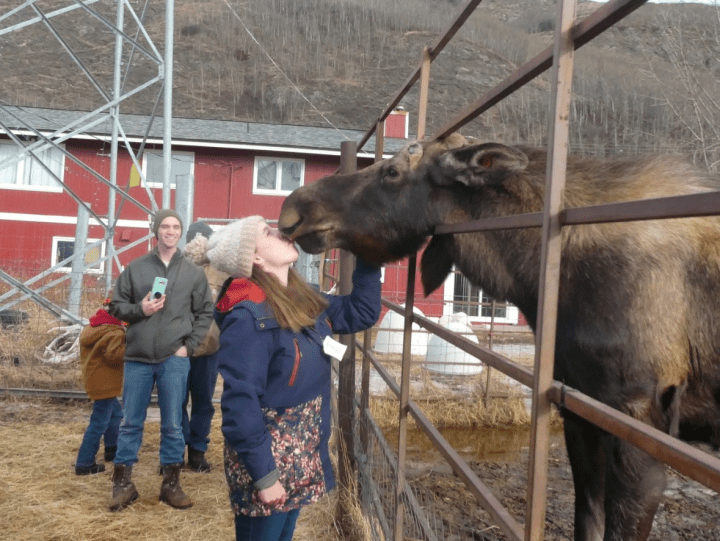
Other things about Alaska are: they take their culture very seriously so make sure you experience the native culture in one way or another (the local tribes are tlingit and haida), make sure to try the seafood (it is amazing!), also eat other foods that you cant find in New Zealand (I loved buying bison at the supermarket and enjoyed moose, reindeer and yak, I also tried herring eggs), say yes to everything even if it is outside your comfort zone, Juneau is similar to New Zealand in some ways (being outdoorsy and casual) and different in others since they are still a part of the states so take in everything that come with this experience.
Overall, going to Juneau was one of the best choices I have ever made and I can’t recommend it enough!!!!

 Waikato Global Experiences Blog